How to Clean and Maintain Acrylic Paint Brushes
· Editorial Team · 7 min read
Quick Summary
Clean acrylic paint brushes right after you switch colors or pause for more than a few minutes, using water and mild soap, so paint never hardens in the bristles. Wipe off excess paint, rinse, lather gently with soap, rinse until the water runs clear, then reshape the tip before drying. Store brushes bristle-up or flat, never standing in water.
- Acrylic paint dries fast and can ruin a brush once it hardens in the bristles.
- Clean brushes whenever you switch colors or pause for more than a few minutes.
- Use two water pots: one for rinsing and a clean one for final rinses.
- Soak only the bristle tip for dried paint, never the ferrule, because soaking loosens the glue.
- Air-dry brushes instead of using a hair dryer, which can warp the handle or glue.
Table of Contents
Why Acrylic Paint Brushes Need Prompt Cleaning
Acrylic paint dries fast, and once it hardens in the bristles it can ruin a good brush for good. Most painters lose their favorite brush not to wear, but to paint left sitting in the ferrule. Learning how to clean and maintain acrylic paint brushes takes only a few minutes per session and keeps your tools working for years. Keeping paint out of the ferrule protects the brush, and the same careful approach helps maintain canvas paintings without damaging their surfaces.
A common mistake is treating cleaning as an end-of-night chore. Clean brushes at the moment you switch colors or pause for more than a few minutes.
What You Need to Clean Acrylic Paint Brushes
You do not need expensive supplies. If you are still deciding what to practise on, you can read about choosing beginner canvas sizes that pair well with your brushes. A small set of basics handles nearly every cleaning job:
- A jar or cup of clean water for rinsing
- Mild liquid soap or artist's brush soap
- Paper towels or a lint-free rag
- A dedicated cleaning fluid, such as a brush cleaner made for acrylics, for stubborn paint
- A flat surface to reshape and dry brushes
Keep a separate water pot for rinsing and a clean one for final rinses. Mixing the two spreads paint through the whole session.
How to Clean Acrylic Paint Brushes in Between Colors
Between colors, your goal is to remove the old color without letting it reach the next one. Once your brushes are clean, you can learn how to avoid muddy colors when you go back to painting. Work through these steps:
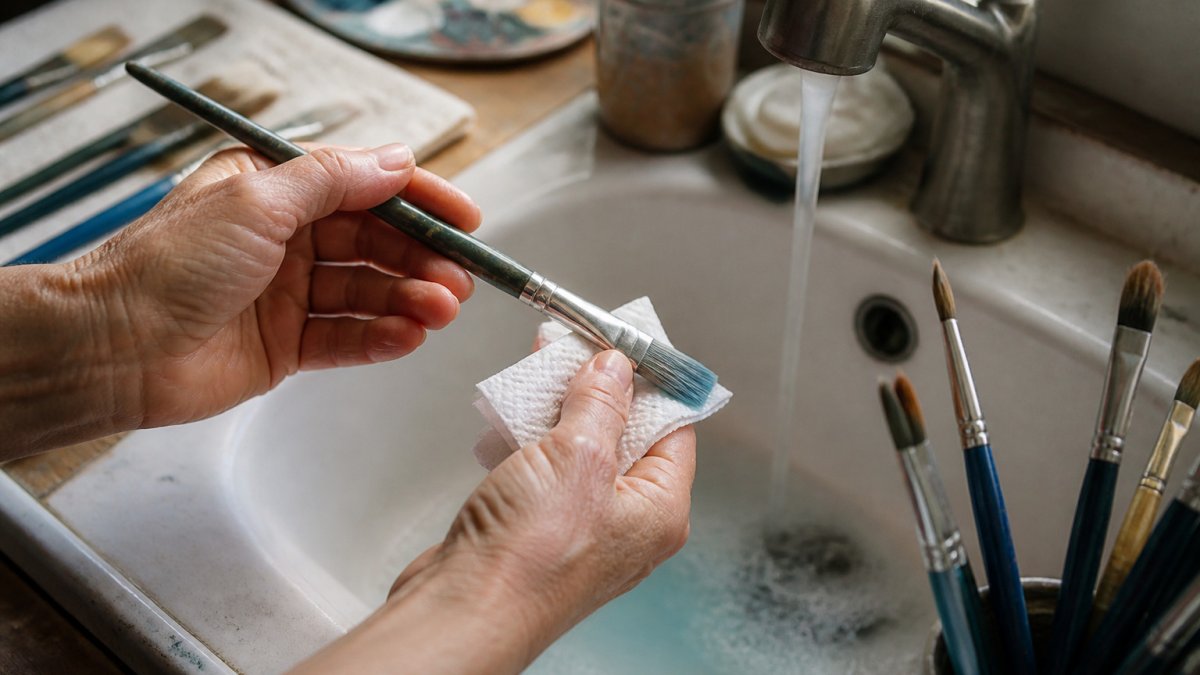
- Wipe off excess paint with a paper towel, pressing gently and dragging toward the tip.
- Rinse the brush in water, swishing it gently so the paint leaves the bristles.
- Work a small amount of soap into the bristles with your fingers.
- Rinse again until the water runs clear.
- Blot the brush on a towel and reshape the tip with your fingers before the next color.
Watch out: rinsing hard against the bottom of the jar can splay the bristles. Swish gently instead.
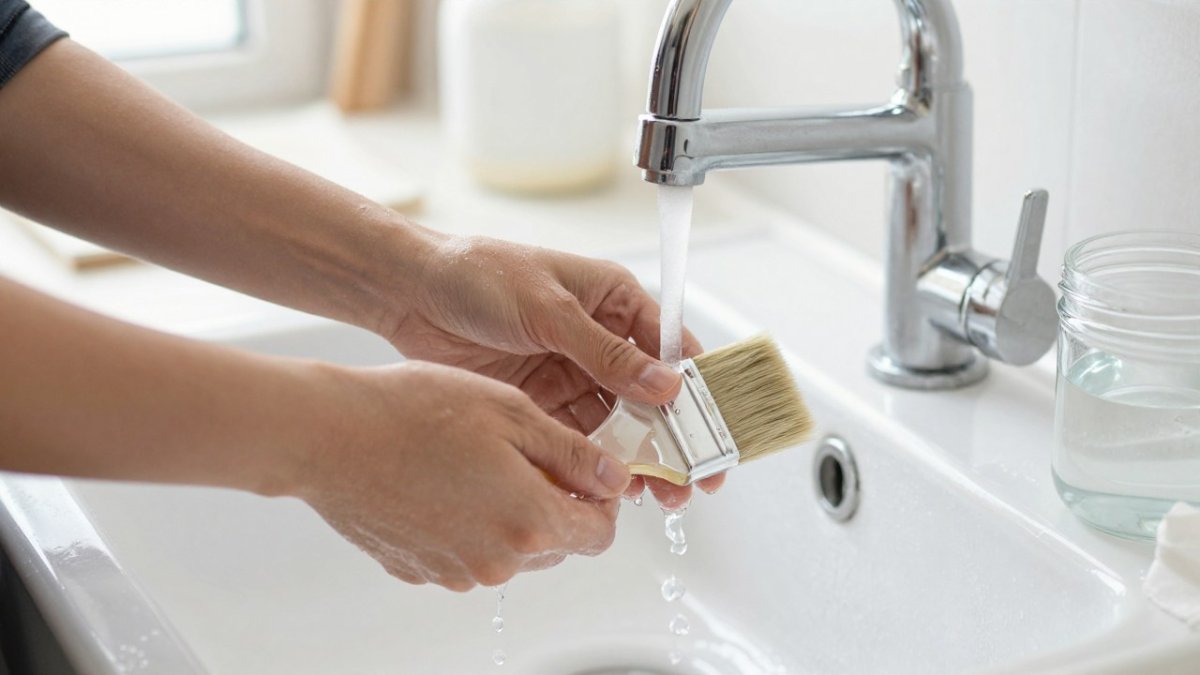
Hands rinsing a flat acrylic paintbrush under a running tap in a bright art studio sink, with a paper towel and jar of water nearby. The woman is American.
What Liquid Is Used to Remove Acrylic Paint From Brushes
Water and mild soap clean most fresh acrylic paint. Soap and water are a common first choice for daily cleaning. For paint that has begun to set, a dedicated brush cleaner for acrylics can loosen it faster. Avoid harsh solvents on natural-hair brushes, since they can dry out and damage the bristles.
How to Remove Dried Acrylic Paint From Brushes
Dried paint is not always a lost cause. Soak only the bristle tip in brush cleaner or warm soapy water for a short period, checking often. Do not submerge the ferrule, because prolonged soaking loosens the glue holding the bristles in place. Once the paint softens, work it out with your fingers and rinse thoroughly.
If the bristles stay stiff or crunchy after several tries, the brush may be past saving. Stopping early protects the rest of your set.
How to Preserve Acrylic Paint Brushes Long Term
Good storage keeps brushes in shape between sessions:
- Store brushes bristle-up in a jar so the tips stay straight
- Lay flat brushes on a towel to dry rather than standing them on their heads
- Keep brushes out of direct sun and heat
- Never leave brushes resting in water
Clean and reshape each brush before storing it. Brushes stored wet grow mildew and lose their point.
Brush Maintenance Schedule and Troubleshooting Common Problems
A simple routine prevents most problems:
- After each session: rinse, soap, and reshape every brush
- Weekly: deep clean any brush used with dark or heavy colors
- Monthly: check ferrules for loose bristles and replace any brush that sheds
Common issues and fixes:
- Splayed tip: Reshape while damp and let dry flat.
- Paint stuck at the base: Soak only the tip briefly, then work the paint out gently.
- Stiff bristles: Soften with cleaner and warm soapy water, then condition with a drop of soap.
Watch out: heat from a hair dryer can warp the handle or glue. Air-dry brushes instead.
Start Your Next Painting Session With Clean Brushes
Clean brushes make every stroke easier, and they make each painting session feel more relaxed. If you are returning to painting, this plain-English acrylic guide for beginners covers the eight-colour palette and the order to paint in. Once your brushes are ready, PaintPrompt can help you pick a design to paint with them. Generate my class design to get a step-by-step guide and a color list.
Frequently Asked Questions
What is the best thing to clean acrylic paint brushes with?
For most acrylic work, the best approach is a combination of water and a mild artist's brush soap or gentle dish soap. Rinse off excess paint first, then work soap into the bristles with your fingers and rinse until the water runs clear. Avoid harsh solvents on synthetic bristles, since they can degrade the brush. Artist's brush soap is formulated for this job and costs little, but any mild liquid soap will do for routine cleaning. Always reshape the tip with your fingers before the brush dries so it keeps its intended point or flat edge.
Can you use Dawn dish soap to clean acrylic paint brushes?
Yes. Dawn dish soap is a common and effective choice for cleaning acrylic paint brushes because it breaks down paint residue without leaving a heavy film. Work a small amount into the bristles with your fingertips, rinse thoroughly with lukewarm water, and repeat until no color comes out. Rinse the soap completely, since leftover soap can stiffen bristles over time. Use this for routine cleaning, and reserve a dedicated brush soap for heavier buildup when you have it on hand.
How do you remove dried acrylic paint from brushes?
Dried acrylic paint can often be rescued if caught early. Soak only the bristles, not the ferrule, in warm water with a bit of soap for several minutes, then gently work the paint loose with your fingers or a brush comb. For stubborn, hardened paint, a dedicated brush cleaner or a few minutes in a paint-removing product made for acrylics can help, following the label directions. Rinse thoroughly afterward, reshape the tip, and let the brush dry flat. Brushes with badly splayed or crunchy bristles may not fully recover.
How do you preserve acrylic paint brushes?
Preserving acrylic paint brushes comes down to three habits: clean them promptly after each session, never let them stand in water or leave them resting on their bristles, and store them with the tips protected. Dry brushes flat or with the bristles facing up, and avoid leaving them in a jar with the tips touching the bottom. Keep a covered container or brush roll for storage. Regular cleaning keeps paint from building up at the ferrule, which is the most common cause of brushes losing their shape and springiness.
