Painting Event Planning for Beginners: A 2026 Guide
· Editorial Team · 15 min read
Table of Contents
- How to Plan Paint and Sip Classes: The 7-Stage Framework
- The Paint Party Supply Checklist for First-Timers
- Beginner-Friendly Painting Project Ideas That Actually Work
- Painting Event Pricing Strategies for New Hosts
- Marketing Your First Painting Event Without a Big Budget
- Legal, Insurance, and Accessibility Basics Most Hosts Skip
- Troubleshooting Common Paint Party Disasters
- Frequently Asked Questions
Last Updated: September 19, 2026
How to Plan Paint and Sip Classes: The 7-Stage Framework
Painting event planning for beginners comes down to one principle: control the variables before guests arrive. This guide from PaintPrompt walks you through the entire process, from picking a format to cleaning the last brush, so your first event runs like your twentieth.
Stage 1: Define Your Event Format and Audience
Start by answering two questions: who is coming, and what kind of event is this? A private party for twelve coworkers differs from a public class of thirty strangers, and the format drives everything downstream.
Stage 2: Lock In Date, Time, and Venue
A common approach is to book your venue before announcing the date. Weeknight events suit corporate groups; weekend afternoons work better for families and social gatherings.
For venue selection, weigh these options:
- Private studio: full control over setup and cleanup, but you carry the rent
- Restaurant or bar: built-in foot traffic, but confirm noise levels and table space
- Community center or library: affordable and accessible, but book early
- Virtual: no venue cost, but you ship or list supplies separately
The Paint Party Supply Checklist for First-Timers
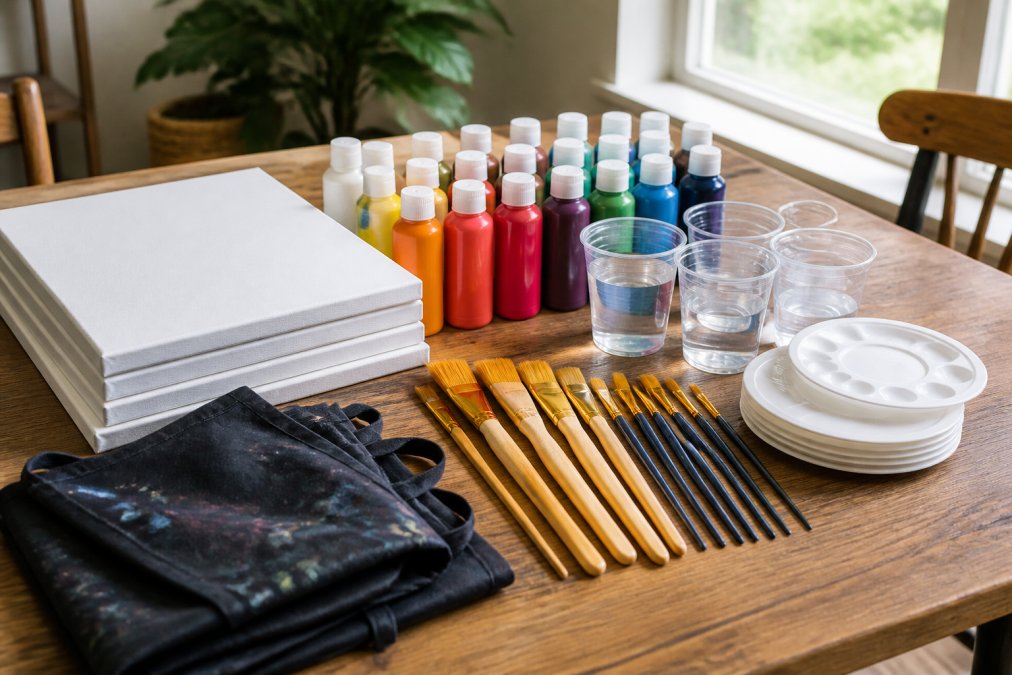
A complete paint party supply checklist covers four categories: art materials, setup gear, cleanup supplies, and guest comfort items. Buy per guest, then add a buffer of about ten percent for spills and extras.
Core Art Materials: Canvas, Acrylics, Brushes, and Easels
Canvases are the biggest line item. For beginners, an 11x14 inch stretched canvas is the sweet spot: large enough to work with, small enough to finish in two hours. Acrylic paints dry fast and clean up with water, which makes them the standard choice for paint and sip events.
Setup and Cleanup Essentials: Aprons, Table Covers, Water Cups
Protect the venue before you protect the art. Disposable table covers, aprons, and water cups prevent the mess that gets hosts banned from good venues.
Your setup and cleanup list:
- Plastic or paper table covers, one per table plus spares
- Aprons or old shirts for every guest
- Water cups, one per two guests, for rinsing brushes
- Paper towels and damp cloths within arm's reach
- Trash bags and a designated drying area for wet canvases
- A box or rack to transport finished paintings
Beginner-Friendly Painting Project Ideas That Actually Work
The best beginner paintings share three traits: bold shapes, limited colors, and forgiving backgrounds. Sunset landscapes, abstract florals, and simple silhouettes all let guests finish something they are proud of.
Painting Event Pricing Strategies for New Hosts
Pricing should cover your costs, pay you for your time, and leave room for the unexpected. Most first-time hosts underprice because they forget half the expenses, and because they price per seat without ever calculating what a seat actually costs them.
Costs to Factor In Before You Set a Price
Your real costs go beyond canvas and paint. Build your price from this list:
| Cost Category | What It Covers | How to Estimate |
|---|---|---|
| Art materials | Canvas, paint, brushes, easels | Per-guest cost plus 10% buffer |
| Setup and cleanup | Table covers, aprons, cups, towels | Flat cost per event |
| Venue | Rent, deposit, or minimum spend | Fixed or per-head |
| Instructor time | Your teaching hours plus prep | Hourly rate times event length |
| Marketing | Flyers, social ads, printing | Per-event budget |
| Contingency | Spills, breakage, refunds | Roughly 10% of total costs |
Turning Costs Into a Per-Seat Price
The mechanism is simple: add every fixed cost (venue, instructor time, marketing, setup supplies), divide by the number of seats you expect to sell, then add your per-guest material cost. That gives you your break-even per seat. Anything you charge above that is your margin.
- Fixed costs for the night: venue $150, instructor time $120, marketing $30, setup supplies $25 = $325
- Per-guest materials: canvas, paint, brush, apron = $8
- Expected seats: 20
- Break-even per seat: ($325 ÷ 20) + $8 = $24.25
Private Parties vs. Public Classes
Private parties should be quoted as a flat rate per group, not per head. A flat rate protects you when the host's guest count drops, and it lets the host feel like they got a deal. A simple formula: your public per-seat price times the minimum group size, plus a travel or setup fee if you go off-site.
- Early-bird: a modest discount for the first several signups, which builds momentum and social proof
- Standard: your normal per-seat price
- At-the-door: the highest price, for guests who decide last minute
Deposits, Refunds, and Protecting Your Margin
Direct guests to your booking page for current rates, and check PaintPrompt's pricing page for platform costs so your per-seat math reflects the full picture.
Marketing Your First Painting Event Without a Big Budget
Marketing a new paint event works best when you lean on local channels and existing relationships. You do not need a large ad budget to fill a first class.
Then layer in low-cost promotion:
- Post event photos and short videos on social media
- Partner with a local cafe or bookstore for cross-promotion
- List your event on community calendars and neighborhood apps
- Offer an early-bird discount to the first ten signups
- Collect emails at every event and build a repeat-attendee list
Legal, Insurance, and Accessibility Basics Most Hosts Skip
Two areas sink new hosts: liability and accessibility. Handle both before your first event, not after a problem.
Troubleshooting Common Paint Party Disasters
Every host eventually faces a crisis. The difference between a rough night and a ruined one is having a plan for the most common failures.
Frequently Asked Questions
What is the 70/30 rule in painting?
The 70/30 rule is a composition guideline where roughly 70% of a painting uses one dominant color or value, and 30% uses a contrasting one. For paint and sip beginners, it keeps a canvas from looking muddy. When you plan painting event projects, pick a dominant background color first, then add a smaller accent color for the focal point. It also applies to space: 70% of the canvas can be background, 30% the subject.
What supplies are essential for a beginner painting party?
At minimum you need canvases, acrylic paints, a few brush sizes, paper plates or palettes for mixing, water cups, and paper towels. Add table covers, aprons, and easels if guests are standing. For a paint party supply checklist, buy one canvas per guest plus a spare or two, and pre-pour paint colors so nobody has to squeeze bottles mid-class. PaintPrompt's printable teaching plan includes a color list you can hand to whoever buys supplies.
How do I price my paint and sip event?
Start by adding up canvas, paint, brushes, venue cost, and your teaching time, then divide by expected guest count. Most hosts aim for a per-guest price that covers supplies plus a teaching fee, with a minimum headcount to protect against low turnout. Painting event pricing strategies often include a higher rate for private parties and corporate bookings, since those come with more setup and customization. Check PaintPrompt's website for current pricing on planning tools.
What is the easiest thing to paint for a beginner?
Sunset scenes, simple silhouettes, and single-object compositions like a moon over water or a lone tree work well because they rely on big color blocks rather than fine detail. Beginner-friendly painting project ideas should take 90 minutes to 2 hours, which matches a typical paint and sip class length. A shape guide that shows guests how to block in the picture helps even first-timers finish something they're proud of.
How do I market my first painting event?
Post in local Facebook groups, neighborhood apps, and community boards first, since paint and sip is a local, social purchase. Ask a few friends to attend and share photos afterward. Event promotion works best when you show a finished example painting and a clear date, price, and location. A simple RSVP link or sign-up form makes it easy for people to commit, and a minimum guest count helps you decide whether to run the event.
What are the 7 stages of event planning for art workshops?
A workable sequence is: define the format and audience, choose date and venue, build the supply list, select the painting project, set pricing, promote the event, and run setup plus cleanup. Legal and insurance checks fit between pricing and promotion. Having a step-by-step guide for each stage keeps painting event planning for beginners from feeling overwhelming, and a checklist you can reuse makes the second event much faster than the first.
Do I need insurance to host a painting event?
If you're hosting at your own space or a rented venue, general liability insurance is worth checking into, since it covers accidents like spills or falls. Many venues require a certificate of insurance before you can book. If you serve alcohol, check your state and local rules, since licensing requirements vary. Ask the venue what they already cover, then fill the gaps with a short-term event policy if needed.
How do I make a painting event accessible to all guests?
Choose a venue with step-free access, offer seating for guests who can't stand for two hours, and provide larger brushes or brush grips for anyone who needs them. Print instructions in a readable font size, and read steps aloud as you go. Keep paint colors distinguishable for guests with color vision differences by labeling cups. Small adjustments like these widen who can attend without changing the event's feel.