Best Tools for Art Workshop Instructors: 2026 Guide
· Editorial Team · 13 min read
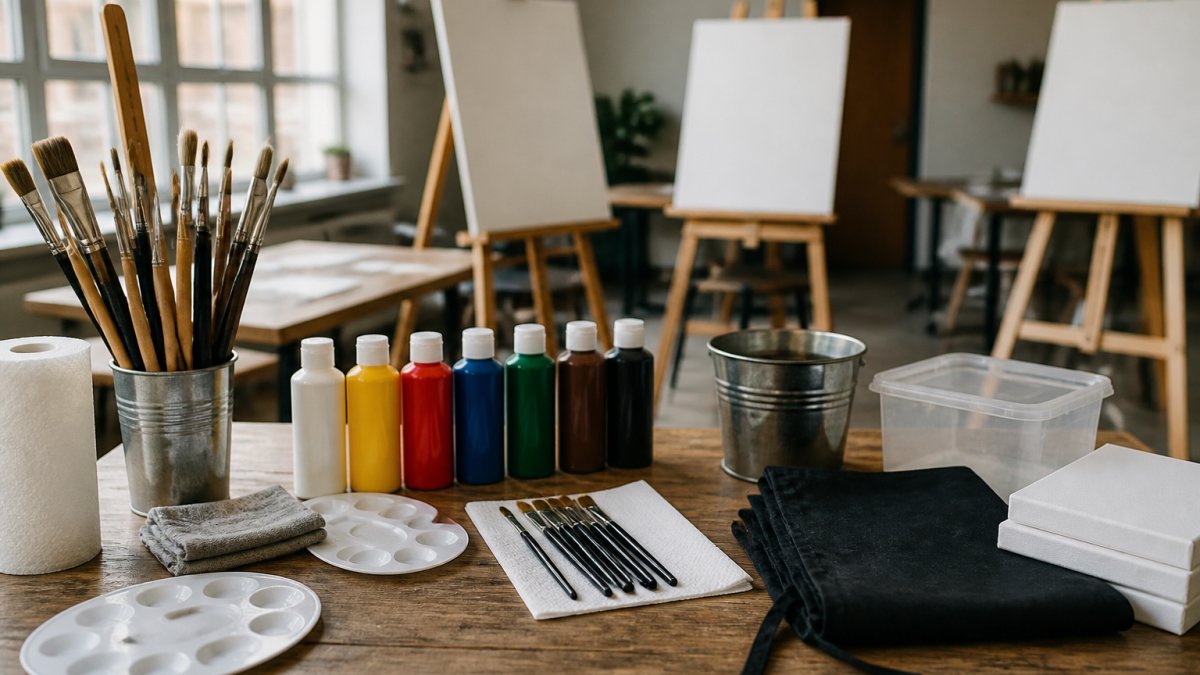
Table of Contents
- What the Best Art Workshop Tools Actually Do for You
- Art Teacher Supplies: The Core Kit Every Workshop Needs
- Painting Supplies for Beginners: What to Buy and What to Skip
- Virtual Art Teaching Tools for Hybrid and Online Workshops
- Building a Beginner Painting Lesson Plan That Finishes on Time
- Storage, Portability, and Cost Per Participant
- How to Choose Tools by Workshop Format and Class Size
- Frequently Asked Questions
Last Updated: October 17, 2026
What the Best Art Workshop Tools Actually Do for You
The best tools for art workshop instructors are the ones that get a room of beginners from blank canvas to finished painting without panic. That is the whole job.
A good tool kit does three things: it removes setup friction, it keeps every guest moving at the same pace, and it survives repeated use. Most guides rank supplies by brand name.
Below, we break down the core kit, the tools worth skipping, and how to match your purchases to your class size and budget.
Art Teacher Supplies: The Core Kit Every Workshop Needs
Start with the essentials that every session touches: drawing tools, painting materials, and something to hold it all. You do not need a full studio. You need a kit that packs up in ten minutes and resets just as fast.
Drawing Tools: Graphite, Colored Pencils, and Fine Liners
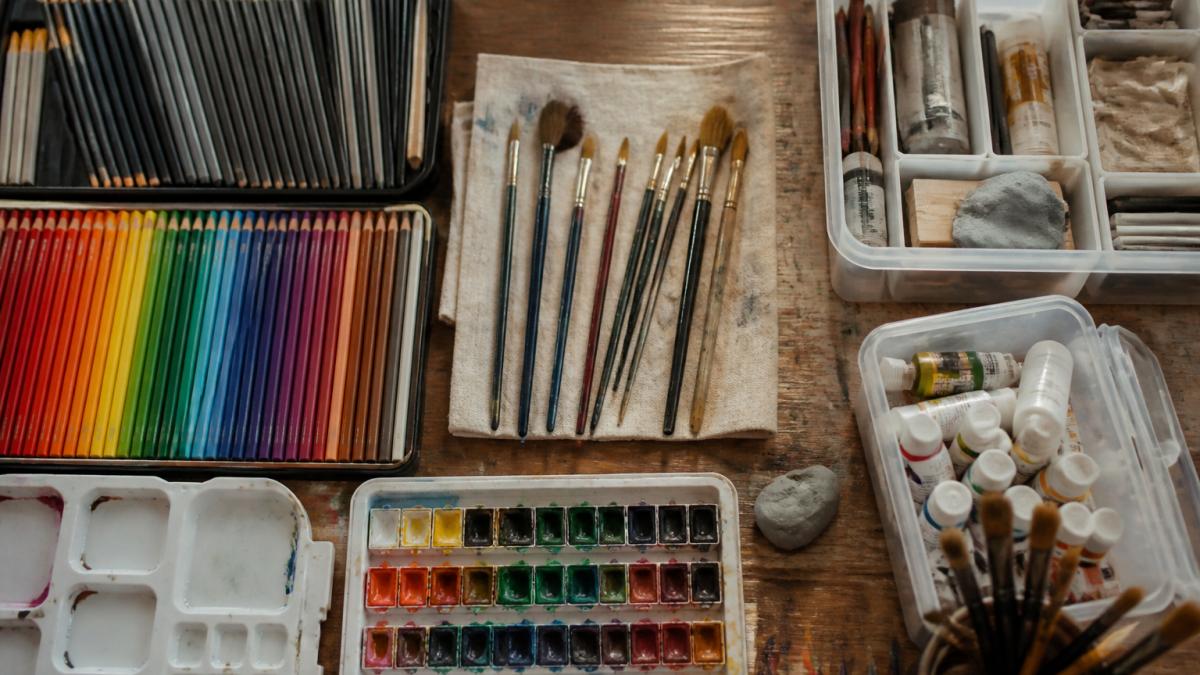
Graphite pencils in two or three hardness grades cover sketching and layout. Colored pencils give guests a low-mess way to block in color before paint. Fine liner pens add crisp outlines that hide shaky brushwork.
A common mistake is buying one pencil grade for the whole class. Beginners press hard, so soft graphite smears and dulls fast. Stock a mix and keep a sharpener at every second seat.
Painting Materials: Watercolor, Brushes, and Cleanup
Watercolor is the friendliest medium for a first class. It dries fast, cleans with water, and forgives mistakes. Round brushes in two sizes handle almost everything a beginner needs.
Cleanup is where workshops lose time. Set out a rinse cup and paper towels per pair of guests before anyone sits down. A kneaded eraser lifts pencil lines without tearing paper, which saves finished pieces.
Painting Supplies for Beginners: What to Buy and What to Skip
Beginners need less than the packaging suggests. Buy student-grade watercolor pans, two round brushes, watercolor paper, a kneaded eraser, and a rinse cup. Skip oil paints, canvas panels, and anything that needs solvent.
Here is what we would cut from a first order:
- Oil paints and mediums: slow drying, smelly, and hard to clean in a rented room
- Full brush sets: most of the brushes go unused
- Cheap thin paper: it buckles and ruins the finish
Student-grade paint behaves well enough for one session. Save artist-grade for advanced classes where guests ask for it.
Virtual Art Teaching Tools for Hybrid and Online Workshops
Virtual art teaching tools turn a live class into something guests can follow from home. The setup is simpler than most instructors expect, but the difference between a usable stream and a frustrating one comes down to four pieces of gear and one rehearsal.
The overhead camera rig
Point the camera straight down at your paper for demonstrations. A smartphone on an adjustable arm stand gives you a true top-down view and lets you slide the paper in and out without moving the lens. Look for a stand with a weighted base and a locking joint; the cheap spring-clip arms drift mid-session and ruin a demo.
Lighting that does not wash out the paper
Overhead room lights cast your hand's shadow right across the work. A clip-on LED light aimed from the side, or a small softbox on a desk stand, evens out the page and keeps color readable on camera. Avoid pointing a bare bulb straight down at glossy watercolor paper; the glare hides the wash. Test with the exact paper and paint you will use in class, because white paper blows out faster than you expect on a phone camera.
Audio: the piece instructors skip
Guests will forgive a slightly soft image; they will not forgive muddy audio. A wired lavalier microphone clipped to your shirt beats the phone's built-in mic for clarity, and a small USB condenser on a desk stand works if you teach from a fixed position. Run a one-minute recording and play it back through earbuds before class. If you hear room echo, hang a blanket or curtain behind you; hard walls are the usual culprit.
Platform and delivery setup
For delivery, use a platform your guests already know. Google Classroom works well for sharing reference images and step guides ahead of time, and a video platform with screen share lets you show a reference image beside your live demo. Presentation slides help you pace the class so nobody falls behind. Keep a second device logged in as a guest so you can see what students see, including whether your reference images are legible on a phone screen.
A five-minute pre-class test
Run this checklist before every online session: camera framed on the paper, light angled from the side, mic level checked in a test recording, reference images uploaded, and a guest-view device open. Most online workshop problems are setup problems, and they are all fixable in five minutes before the room fills.
Hybrid sessions
For hybrid workshops, treat the in-room and remote audiences as two separate productions. The overhead camera serves remote guests, but in-room guests need to see the demo too, so mirror your phone to a monitor or projector. Assign one person to watch the chat and relay questions; an instructor with paint on their hands cannot monitor a screen and demonstrate at the same time.
Building a Beginner Painting Lesson Plan That Finishes on Time
A beginner painting lesson plan should run in a fixed number of steps with a clear finish point. Build it backward from the last brushstroke.
Every plan needs a shape guide, a color list, and a step count. Guests who can see the outline blocked in before they start finish with far more confidence.
Test the plan on yourself first. If a step takes you more than a few minutes, it will take a beginner twice as long.
Storage, Portability, and Cost Per Participant
Storage containers and classroom organization decide whether you can run back-to-back sessions. Clear bins by material type let you restock without digging. Label everything and keep a packing checklist taped inside the lid.
Cost per participant matters more than the sticker price on any single item. Divide the total kit cost by the number of guests it serves across its usable life. Durable brushes and reusable water cups beat cheap disposables every time.
| Item | Buy Priority | Why It Matters |
|---|---|---|
| Student watercolor pans | High | Low mess, fast cleanup |
| Round brushes (2 sizes) | High | Covers most beginner work |
| Watercolor paper | High | Prevents buckling |
| Kneaded erasers | Medium | Protects finished pieces |
| Clear storage bins | Medium | Speeds setup and reset |
| Oil paints | Skip | Solvent cleanup, slow dry |
How to Choose Tools by Workshop Format and Class Size
Most supply guides rank tools by brand. This one ranks them by the room you are teaching in. Match your kit to the format and the head count first, and the brand question mostly answers itself.
Start with a per-participant budget
Cost per participant matters more than the sticker price on any single item. Divide the total kit cost by the number of guests it serves across its usable life.
A practical split is to budget consumables per seat and durables per station. A station serves two guests who share a rinse cup and paper towels, so a twelve-person class needs six stations, not twelve. That single decision cuts durable costs roughly in half without slowing the room down.
Match the kit to the format
- Small studio class (up to eight): shared materials work. One central supply table, a few sets of brushes, and a single rinse station. Invest in quality over quantity because the same guests return.
- Large event or corporate team-building (twelve or more): per-seat kits in labeled containers so nobody waits for a brush. Portability wins; pack individual kits that stack and reset in minutes.
- Paint and sip nights: speed of cleanup is the whole game. Pre-pour paint, pre-cut paper, and stage rinse cups and towels before guests arrive.
- One-to-one instruction: you can share materials and adjust in real time. Spend the budget on a second set of brushes so you can demonstrate and hand off without stopping.
- Online and hybrid: camera, lighting, and microphone gear come first; physical supplies second. Remote guests cannot lean over and borrow a brush.
Class size changes the bottleneck
At six guests, the bottleneck is your attention. At twenty, it is materials and cleanup. Plan the room around the bottleneck: small classes need a clear demo sightline and pre-outlined guides so guests can work independently; large classes need per-seat kits, a packing checklist taped inside each lid, and a reset routine that one helper can run between sessions. If you regularly teach more than sixteen, budget for an assistant and treat that cost as part of the per-participant math.
Accessibility is a format decision, not an afterthought
Offer larger brushes and pre-outlined shape guides for guests who need them, and keep a few adaptive options on hand: brush grips, a tabletop easel for guests who cannot work flat, and printed step guides in large type. For online sessions, share reference images as high-contrast files and caption your live demo. A little planning keeps every guest included, and it costs very little when you build it into the kit from the start.
A quick selection checklist
Before you buy, answer five questions: How many guests per session? How many sessions per month? Which format, in-person, online, or hybrid? What is the per-participant budget? Which items are consumable and which are durable? The answers point to a kit faster than any brand comparison.
Frequently Asked Questions
What supplies does an art teacher need to run a beginner painting workshop?
At minimum, you need canvas or watercolor paper, one set of acrylic or watercolor paints per table, a few brush sizes, water cups, paper towels, and a covered surface. Add graphite pencils and a kneaded eraser for sketching, plus storage containers so materials pack down fast between sessions. Keeping the art teacher supplies list short makes setup and cleanup predictable, and it lowers the cost per participant when you buy in bulk.
How can art instructors make painting lessons easier for beginners?
Break each painting into small, numbered steps and show the shape guide before anyone touches a brush. Pre-mix colors or hand out a printed color list so students aren't guessing. Tools like PaintPrompt generate a 10-step guide, color list, and printable teaching plan from a single idea, which keeps a beginner painting lesson plan consistent from class to class. Demonstrate one step, then let the room catch up before moving on.
What are good tech tools for art teachers running virtual or hybrid classes?
A smartphone or webcam on a camera stand, a clip-on microphone, and two light sources (one on the canvas, one on you) cover most virtual art teaching tools needs. Pair that with a platform like Google Classroom or Zoom for sharing slides and tutorial videos. Test your overhead angle before class: students need to see your brush hand and the canvas at the same time, or the demonstration loses its value.
What is the 70/30 rule in art, and does it apply to workshop planning?
The 70/30 rule is a composition guideline: roughly 70% of the canvas carries the dominant element and 30% is left for contrast or breathing room. For instructors, it doubles as a planning rule. Spend about 70% of class time on guided painting and 30% on setup, breaks, and cleanup. That split keeps a two-hour workshop on schedule and stops the last 15 minutes from turning into a rush.
Running a workshop means juggling supplies, timing, and a room full of beginners at once. PaintPrompt takes the planning off your plate with instantly generated class-ready designs, a 10-step guide, a color list, and a printable teaching plan built by real paint and sip hosts. Start with the free trial and see how fast a full month of classes comes together. Generate my class design.