Legal Requirements for Hosting Paint and Sip Events
· Editorial Team · 10 min read
Quick Summary
Hosting paint and sip events generally requires a business registration, local zoning clearance, and an EIN if you hire staff. Serving alcohol usually requires a liquor license or event permit, which varies sharply by state. You should also use a reviewed waiver, teach original or public-domain designs, and carry general liability insurance.
- Register your studio as a business and confirm zoning clearance for commercial guest traffic.
- Check your state's liquor license or event permit rules before serving wine or beer.
- Have a local attorney review your waiver, since enforceability varies by state.
- Teach original compositions or public-domain artwork to avoid copyright exposure.
- Confirm your insurance covers injuries, property damage and any alcohol-related exclusions.
Table of Contents
- Why Legal Requirements for Paint and Sip Events Vary by Location
- Paint and Sip Business License: Registering Your Studio
- Paint and Sip Liquor License: When You Serve Alcohol
- Paint and Sip Waiver Template: Protecting Guests and Your Business
- Copyright Rules for Paint and Sip Classes
- Insurance, Safety Rules and Recordkeeping for Each Event
- Building Your Compliance Checklist Before the Next Class
- Frequently Asked Questions
Last Updated: November 1, 2026
Hosting a paint and sip event in the United States involves more than buying canvases and brushes. Each layer of compliance, from a business license to a liquor permit to copyright clearance on the designs you teach, can expose a studio to fines or liability if it is skipped. Learn how to set a profitable ticket price once these costs are accounted for. This guide is written for hosts who want a clear picture of the legal side before the next class goes on the calendar.
A paint and sip event is, in legal terms, a business activity: you sell tickets, supply materials and often serve drinks at your paint and sip events. Requirements are set mostly at the state and local level, so the rules that apply to you depend on where your studio operates. Treat the details below as a starting map and confirm current rules with your state and municipal offices.
Why Legal Requirements for Paint and Sip Events Vary by Location
Most of the obligations come from three sources: state law, county or city ordinances, and federal rules that touch specific activities. A studio in one city can face different zoning, permit and alcohol rules than a studio twenty miles away. Because the same event can trigger several layers at once, the practical starting point is a call to your city clerk and your state's business and alcohol agencies. Many hosts find that a single conversation with the local licensing office reveals two or three requirements they had not considered.
Paint and Sip Business License: Registering Your Studio
Before you sell your first ticket, your studio generally needs to be registered as a business. This usually means a state business entity filing, a local business license or general business tax registration, and a federal Employer Identification Number (EIN) if you hire staff. Home-based studios often face additional zoning checks. Hosting guests at a residence can conflict with residential zoning rules, so confirm that your address is cleared for commercial traffic before inviting paying guests.
Paint and Sip Liquor License: When You Serve Alcohol
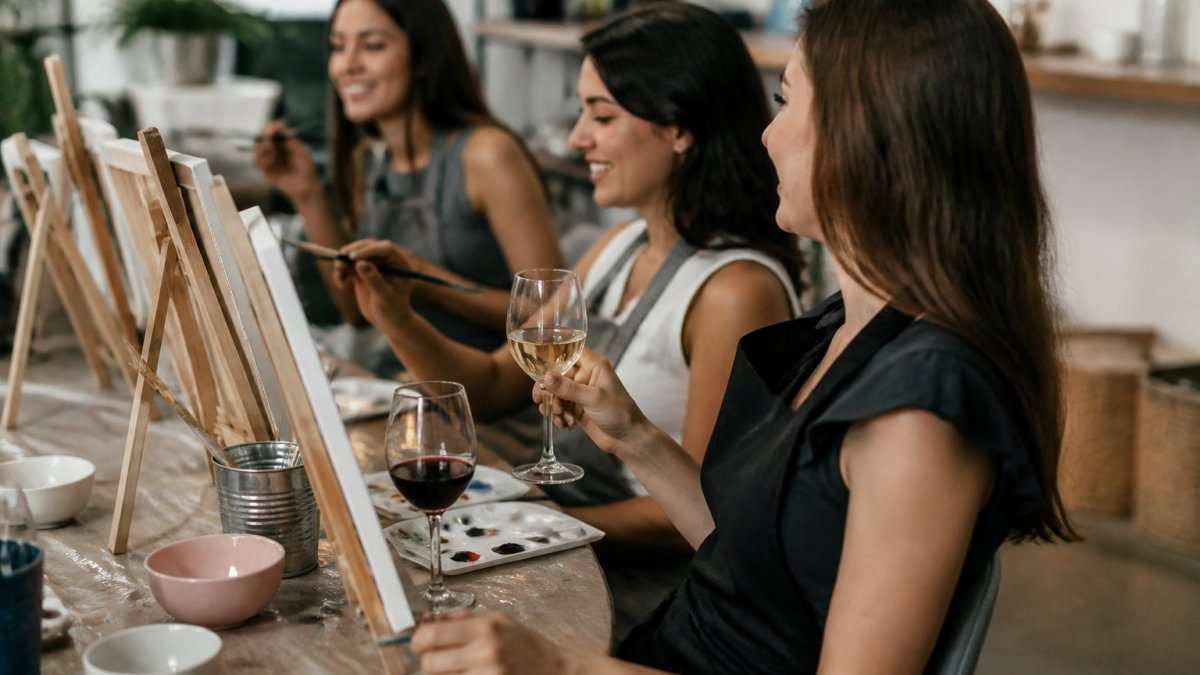
Serving wine or beer at a paint and sip class is the point where requirements become most restrictive. In most states, selling alcohol requires a retail liquor license or a one-day or event permit, and the rules differ sharply by state. Some states allow you to provide alcohol without a license if guests bring their own, while others prohibit it entirely. Check whether your state requires training for staff who serve alcohol, and confirm with your insurer whether alcohol service is covered.
Private Events Versus Open Public Classes
The distinction between a private event and an open public class often changes what you need. A private booking for a single group, such as a birthday party, may fall under a different permit category than a recurring public class sold to anyone who buys a ticket. Ask your licensing office how each format is classified, because restructuring a recurring class as private bookings does not automatically remove your obligations.
Paint and Sip Waiver Template: Protecting Guests and Your Business
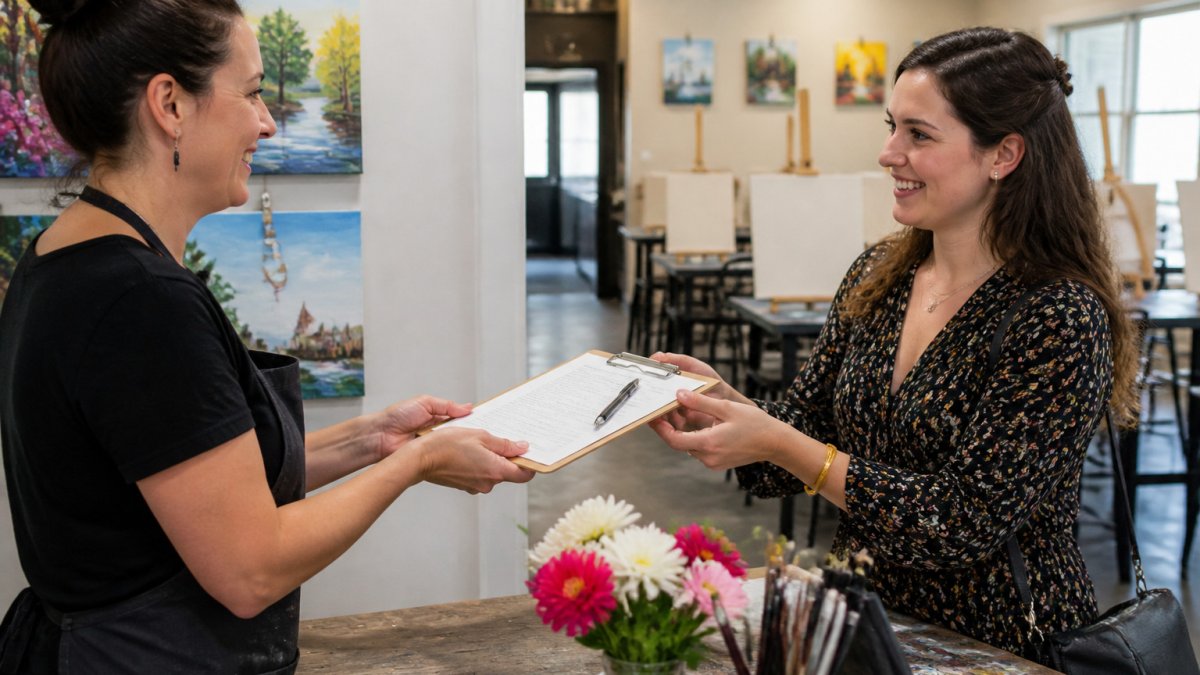
A signed waiver is one of the most common risk-management tools for creative events, even though it does not shield you from every claim. A solid waiver should identify the activity, state that participants accept inherent risks such as slips, spills and sharp tools, and include an acknowledgment of any alcohol service. It should be reviewed by a local attorney, because enforceability varies by state. Keep signed copies on file for each event so you can demonstrate that guests agreed to the terms.
Copyright Rules for Paint and Sip Classes
Teaching a design that copies a famous painting, a popular character or a photograph can create copyright exposure at paint and sip events, even for a class that is not sold. Paint a sunset with eight acrylic colours for a ready-made original design that avoids reproducing protected artwork. Under U.S. law, copyright protects original artistic works, and reproducing a protected design for commercial purposes without permission can lead to claims. The safer route is to teach original compositions, public-domain artwork such as works whose copyright has expired, or designs you have licensed. Choose paint and sip designs that are paintable and safe to teach. Be cautious with trending images from social media, since many of them are protected by copyright.
Insurance, Safety Rules and Recordkeeping for Each Event
General liability insurance is the baseline protection for a studio that hosts the public. Ask about coverage for injuries, property damage and product liability, and about any alcohol-related exclusions. Safety rules matter as well, so review your local requirements for walkways, storage of cleaning products and first-aid supplies. Pace a beginner class and help struggling guests without taking over their canvas. Recordkeeping ties the whole compliance picture together. Maintain attendance records, signed waivers, alcohol service logs where applicable, and copies of your permits, so that you can respond quickly if a question or complaint arises.
The article points to a few core compliance areas hosts should keep track of for each event.
| Area | What to keep on file | Why it matters |
|---|---|---|
| General liability insurance | Coverage for injuries, property damage, product liability | Baseline protection for a studio hosting the public |
| Alcohol coverage | Confirm whether alcohol service is excluded | Alcohol-related exclusions can leave you exposed |
| Signed waivers | One signed copy per guest, per event | Shows guests agreed to the terms |
| Attendance records | Who attended each event | Supports your response to any question or complaint |
| Alcohol service logs | Required where alcohol is served | Documents compliance with alcohol rules |
| Permits and licenses | Copies of all active permits | Lets you respond quickly to a licensing inquiry |
Building Your Compliance Checklist Before the Next Class
Turn this overview into a working checklist before your next event. Confirm your business registration and zoning status, verify whether alcohol service requires a permit, classify each booking as private or public, finalize a reviewed waiver, audit your class designs for copyright risk, confirm your insurance covers the activities you run, and set up a filing system for records. Once those items are in place, you can focus on the creative side of the night. For guidance on the planning side of each session, see How to Plan a Paint and Sip Class: 2026 Guide.
Frequently Asked Questions
Do you need a license to host a paint and sip event?
Most paint and sip studios need a general business license from their city or county before they open their doors. Requirements differ by location, so check with your city clerk, county office or state business registration agency. A general business license covers operating the business itself. If you also serve alcohol, you will need a separate liquor license from your state alcohol regulator, and the rules for private events may differ from those for public classes.
Do paint and sip hosts need a liquor license?
A liquor license is required when you sell or serve alcohol as part of your paint and sip business. Some states allow BYOB arrangements or special event permits instead of a full license, while others restrict these options. Contact your state alcohol beverage control agency to confirm which rules apply. Serving alcohol without the correct authorization can lead to fines or the suspension of your business activities.
Can you serve alcohol at a private paint and sip event?
Many states treat a private event held on closed premises differently from an open public class, but the rules still vary widely. Some states require a one-time event permit, and others require the host to hold an existing license. Before serving alcohol at any private booking, confirm the requirements with your state alcohol regulator and document how you verify guest ages. Keeping written records of permits and approvals protects you if questions come up later.
What legal forms should paint and sip participants sign?
A well-drafted paint and sip waiver template typically includes the participant's name, the event date, an assumption-of-risk statement, an acknowledgment of the studio's rules, and a signature line. Because the enforceability of waivers depends on state law, have a local attorney review your template before you rely on it. Store signed copies securely, and ask guests to sign a fresh form for each new event or series.
Can you use copyrighted images for a paint and sip class?
Using copyrighted artwork as a reference or a teaching image without permission can violate copyright law, even in a class setting. Public domain works and images you have licensed or created yourself are safer choices. If you want to teach a specific copyrighted design, seek written permission from the rights holder. Original compositions, including those generated for your own classes, give you more control over what you teach and share.
Do paint and sip businesses need liability insurance?
Liability insurance is strongly recommended for any studio that hosts guests with brushes, paint and open flames or candles. General liability policies commonly cover bodily injury and property damage claims, and many venues require proof of coverage before they will rent space to you. Ask your insurer whether alcohol service changes your premium and whether your policy covers private events held off-site.
What safety rules apply to paint and sip events?
Safety expectations include clear ventilation, well-lit workspaces, non-toxic or properly labeled paints, and a plan for handling spills and first aid. If you serve alcohol, you should also cut off service to visibly intoxicated guests and arrange safe transportation options. Check your local fire code and occupancy limits, since they set how many people a room can hold. Written procedures make these expectations easy to explain to staff and guests.
