Plan Recurring Art Events for Beginners: 7-Step Guide
· Editorial Team · 12 min read
Table of Contents
- Define Your Art Event Concept and Audience
- Choose Your Event Date, Time, and Recurring Schedule
- Select a Venue and Plan Your Event Layout
- Create Your Art Event Planning Checklist
- Gather Paint and Sip Class Supplies and Equipment
- Set Your Budget and Price Your Event
- Beginner Art Workshop Ideas to Keep Events Fresh
- Promote Your Recurring Art Event and Build Community
- Frequently Asked Questions
Last Updated: October 11, 2026
Define Your Art Event Concept and Audience
Planning recurring art events for beginners starts with clarity about what you're offering, a casual paint and sip night, structured workshop, or themed festival. Your concept shapes venue choice, supplies, pricing, and promotion.
Know your audience: beginners differ from experienced painters; corporate teams differ from hobbyists. The most successful recurring art events answer one question: who are we serving, and what do they want to walk away with?
Define your event's core purpose: a finished painting, a specific technique, or social connection. This clarity guides design and marketing.
Choose Your Event Date, Time, and Recurring Schedule
Choosing the right cadence is critical for recurring art events. Match frequency to three factors: your preparation capacity, venue availability, and audience demand.
Matching Cadence to Your Capacity
Audit time per event: preparation, setup/teardown, delivery, follow-up.
Match cadence to capacity: 8 hours/week allows weekly events with repeats; 12-16 hours/month supports monthly fresh designs; part-time work suits bi-weekly or monthly.
Testing Frequency Before You Commit
Run your first three events, then evaluate: attendance trends (growing, flat, or declining), repeat rate (target 30%+), your energy and quality, and venue consistency. Declining attendance or burnout signals an unsustainable cadence.
Cadence Recommendations by Event Type
Weekly: Paint and sip studios, ongoing classes. Requires repeatable designs and committed audience. Bi-weekly: Themed workshops, community nights. Balances fresh content with manageable prep. Monthly: Festivals, showcase nights, themed series. Allows thoughtful design and feedback refinement. Seasonal: Large festivals, pop-ups. Lower ongoing commitment; good for testing market.
Locking in Your Day and Time
Pick a day and time matching your audience: weekday evenings (6-9 PM) for working professionals; weekend mornings (9 AM-12 PM) for families; weekend afternoons (1-5 PM) for mixed audiences; lunch hours (12-1 PM) for corporate groups.
Keep your day and time consistent for at least six months. Attendees need predictability. If you must shift, announce four weeks in advance.
Building a Sustainable Rhythm
Many successful recurring art events start monthly, then shift to bi-weekly or weekly once systems are in place. Document your cadence on your website, emails, and social media: "We meet the second Thursday of every month at 7 PM." This clarity builds trust.
Select a Venue and Plan Your Event Layout
Your venue sets the tone. Look for good natural light, enough table room for easels, and space for guests to spread out. Key considerations: 50-75 sq ft per person, water access, sturdy tables, ventilation, parking, and accessibility.
Sketch a simple floor plan before booking. Arrange tables so guests can see a demonstration area and each other without feeling cramped. Leave walking paths clear. If your venue is small, consider staggered seating or standing easels to maximize space.
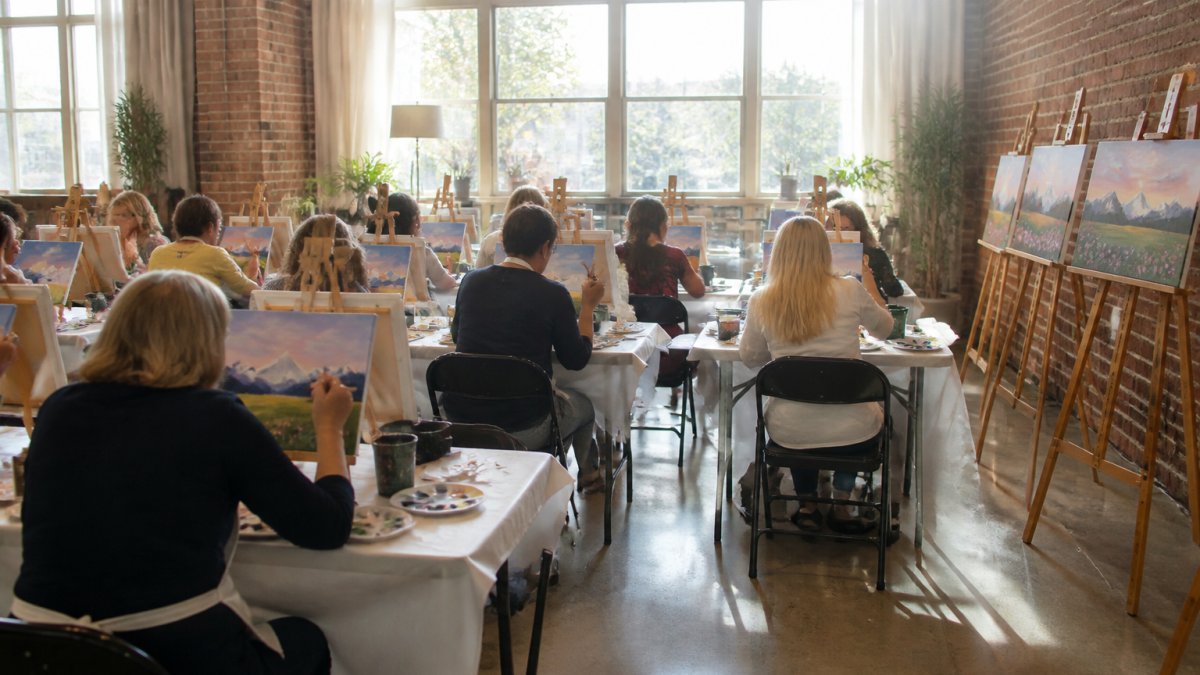
Test your layout with a mock setup if possible. Walk through the guest experience: arrival, finding their seat, seeing the demo, painting, and cleanup. This walk-through often reveals spacing or sightline issues you can fix before your first event.
Create Your Art Event Planning Checklist
Use this checklist for each recurring session: 4 weeks before: confirm venue, design project, order supplies, create promotion. 2 weeks before: finalize guest count, confirm instructor, test design, send reminders. 1 week before: prepare materials, set up presentations, confirm venue access, brief assistants. Day of: arrive early, test lighting, set supplies, welcome guests. After: collect feedback, document results, clean inventory, plan adjustments for next month's recurring art events.
Gather Paint and Sip Class Supplies and Equipment
Beginners need simple, forgiving supplies. Essential: acrylic paints (primary colors plus white/black), brushes (round, flat, filbert), pre-primed canvas (11x14" or smaller), palettes, water containers, paper towels, aprons, and easels. Optional: reference images, paint mixing examples, sponges, spray bottles.
Buy supplies in bulk to reduce per-guest costs. Store paints in a cool, dry place and check before each event. A printed step-by-step guide for each guest eliminates confusion and boosts confidence. Keep a backup supply kit for spills, tears, or restarts.
Set Your Budget and Price Your Event
Calculate fixed costs (venue, equipment) and variable costs (supplies, instructor time). Price per person to cover costs plus margin. Offer early-bird discounts for recurring attendees to build a stable community around your recurring art events.
Beginner Art Workshop Ideas to Keep Events Fresh
Rotate painting subjects and themes while keeping difficulty consistent. Monthly ideas: seasonal landscapes, animals, abstract designs, cultural themes, still life, inspirational quotes. Announce next month's theme at each event to give people a reason to return. Rotate instructors if possible, fresh personalities keep the experience interesting.
Promote Your Recurring Art Event and Build Community
Promotion sustains attendance, but for recurring events, retention matters more than acquisition. Attracting 30 new people to your first event means little if only 5 return. The real work is building a community that comes back month after month and brings friends.
Initial Promotion Channels
Use multiple channels to reach your first audience:
- Email list: Build a list before your first event. Offer a discount (10-15% off) for early registration. Send reminders 3 weeks, 2 weeks, and 1 week before each event.
- Social media: Post behind-the-scenes setup photos, finished guest paintings, and theme previews on Instagram and Facebook. Tag attendees in photos (with permission) to encourage sharing.
- Local community boards: Post flyers at coffee shops, libraries, community centers, and coworking spaces. Include a QR code linking to registration.
- Word of mouth: Encourage guests to invite friends by offering a $5-10 referral discount for both the referrer and the new attendee.
- Your website or blog: Create a calendar showing all upcoming events with descriptions, pricing, and registration links.
- Nextdoor or Craigslist: Post in the events section of local community boards.
Retention Workflow: The 7-Day Follow-Up Cycle
Retention begins immediately after the event ends. Implement this workflow for every recurring event:
Within 24 hours of the event: Send a thank-you email with 2-3 photos from the event. Include a link to a brief feedback survey (3-5 questions, takes 2 minutes). Offer a small incentive: "Complete this survey for a $5 discount on your next event."
Sample survey questions:
- What did you enjoy most about today's event?
- What would you like to see at future events?
- How likely are you to attend the next event? (1-10 scale)
- Would you recommend this event to a friend?
3-4 days after the event: Send a second email highlighting next month's theme and announcing registration is open. Include a "returning attendee" discount (10-15% off) to reward loyalty. Example: "You were amazing last month. Here's 15% off next month's ocean-themed paint night, just use code RETURN15 at checkout."
1 week before the next event: Send a reminder email to registered attendees with the event details, what to bring, parking info, and a "bring a friend" incentive. Example: "Bring a friend and you both get $5 off. Registration closes Friday."
If someone doesn't register for the next event (after attending a previous one): Send a re-engagement email 2 weeks after their last event. Ask what would bring them back: "We missed you! Is there a theme or time that works better for you? Let us know." Offer a one-time 20% discount to remove friction.
Building Community Between Events
Attendees who feel connected to the group are far more likely to return. Create touchpoints beyond the event itself:
Private Facebook Group or Email List: Create a space where attendees can share photos of their paintings, ask technique questions, and discuss upcoming themes. Post a weekly prompt: "What's your favorite painting technique?" or "Share a photo of your painting from last month's event." This keeps people engaged and reminds them the community exists.
Monthly Newsletter: Send a one-page email featuring: (1) photos from last month's event, (2) a spotlight on one attendee's painting or story, (3) next month's theme and why you chose it, (4) a technique tip or artist spotlight, (5) a call to bring a friend.
Attendee Milestones: Track who's attended 3, 6, and 12 events. Send a personal note or small gift (a new brush, a paint set, a discount code) recognizing their loyalty. Example: "You've attended 6 of our paint nights! You're officially part of the core crew. Here's 20% off your next event as a thank-you."
Themed Social Events (Optional): Once you have 20+ regular attendees, host a casual social gathering between events, a gallery walk, a coffee meetup, or a virtual painting challenge. This deepens relationships and increases the likelihood attendees will defend "their" event to friends.
Measuring Retention and Adjusting
Track these metrics after every three events:
- Repeat attendance rate: (Number of attendees who came to event 2 or 3 ÷ Total attendees at event 1) × 100. Target: 40%+ by event three.
- Average attendance trend: Is attendance growing, flat, or declining? Declining attendance after month two signals a problem with event quality, cadence, or promotion.
- Net Promoter Score (NPS): Ask attendees: "How likely are you to recommend this event to a friend?" (0-10 scale). Subtract detractors (0-6) from promoters (9-10). Target: +30 or higher.
- Referral rate: Track how many new attendees came from existing attendees. Aim for 20-30% of new attendees to be referrals by month three.
If repeat attendance is below 30% by event three, investigate:
- Did attendees give negative feedback in surveys?
- Was the event too difficult, too easy, or unclear in its instructions?
- Did the venue have issues (too crowded, poor lighting, uncomfortable)?
- Was the promotion unclear about what to expect?
Adjust one variable at a time. If feedback says the event was too rushed, add 30 minutes. If attendees felt lost, create a printed step-by-step guide. If the venue was cramped, find a larger space. Test the change for two events, then measure again.
Promotion Channels for Recurring Events (Ongoing)
Once you have a core audience, shift your promotion focus from acquisition to retention and word-of-mouth:
- Email remains your strongest channel. Maintain your list and send consistent reminders. Email remains your strongest channel.
- Attendee referrals become your second-strongest channel. By month three, referrals should account for 20-30% of new attendees. Incentivize this with small discounts.
- Social media builds brand awareness. Post consistently (1-2 times per week) but Social media builds brand awareness. Use it to build anticipation and showcase community.
- Local partnerships: Partner with nearby businesses (coffee shops, bookstores, gyms) to cross-promote. Offer their customers a discount; they promote your event to theirs.
PaintPrompt helps studios and hosts plan fresh, class-ready designs each month in seconds. By describing your theme, you receive a complete painting design, 10-step instruction guide, color list, and printable teaching plan. This consistency and quality directly support retention: attendees know they'll have a clear, achievable painting experience every time they return.
Frequently Asked Questions
How long should a beginner paint-and-sip class last?
Most beginner paint and sip classes run 2 to 3 hours. This gives participants time to settle in, listen to instructions, complete their artwork at a comfortable pace, and socialize. Shorter sessions (90 minutes) work for simple projects; longer sessions (3+ hours) suit detailed paintings or multi-step techniques. Test different lengths with your first few events to find what works for your audience and project complexity.
What supplies do I need for a beginner art event?
Essential paint and sip class supplies include acrylic paints, brushes (various sizes), canvas or paper, water cups, paper towels, aprons, and easels or tables. Add palette knives, sponges, or foam brushes for texture effects. Provide reference images or step-by-step guides so guests can follow along. If serving food or drinks, include napkins, plates, and utensils. Start with a basic kit and expand based on your project and attendee feedback.
How often should you host a recurring art event?
Weekly, bi-weekly, or monthly recurring art events all work, depending on your audience and resources. Weekly classes build strong community but require consistent preparation. Monthly events are easier to manage for small studios or freelance instructors and allow time between sessions to refresh content and gather feedback. Start with monthly or bi-weekly to test demand, then adjust based on attendance and your capacity.
What makes a good beginner art workshop idea?
Beginner art workshop ideas should be achievable in one session, use simple techniques (blocking in shapes, basic shading), and produce a finished piece guests feel proud to take home. Seasonal themes, landscapes, and abstract designs work well. Avoid overly detailed or anatomically complex subjects. Use step-by-step guides and reference images so participants don't feel lost. Test each idea with a small group first to ensure it's actually completable for beginners.