Best Tools for Painting Event Planners: Top Picks
· Editorial Team · 13 min read
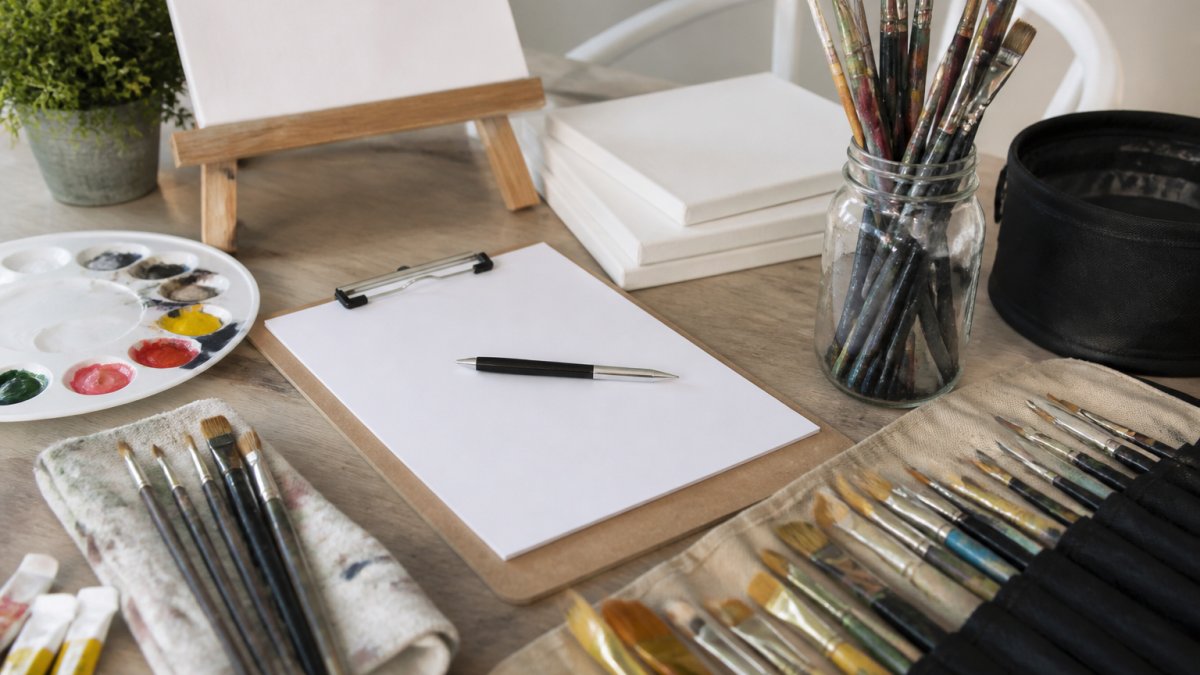
Table of Contents
- Quick Comparison: Best Tools for Painting Event Planners
- How We Evaluated These Tools
- PaintPrompt: AI Tools for Event Planning and Class Design
- Physical Supplies: Painter's Tape, Drop Cloths, and Brushes
- Paint and Sip Class Lesson Plan Templates vs. Generated Plans
- How to Plan a Painting Workshop for Beginners
- Logistics and Budgeting for Event Painting Equipment
- Frequently Asked Questions
Last Updated: September 27, 2026
Quick Comparison: Best Tools for Painting Event Planners
The best tools for painting event planners split into two jobs: software that plans the class, and physical supplies that survive a live room full of beginners. PaintPrompt handles the first job by generating a complete, class-ready design with a 10-step guide, a color list, and a printable teaching plan from a single prompt.
Here is the short version before the detail:
| Tool | Category | Starting Price | Best For |
|---|---|---|---|
| PaintPrompt | Class design and lesson planning | Free trial | Paint and sip hosts, workshop instructors |
| QuoteIQ | Scheduling and crew management | $29.99/month | Painting contractors running events |
| Cvent | Full event management | Custom quote | Large corporate events |
| Whova | Attendee engagement | Custom quote | Conferences and workshops |
| Asana | Project management | $10.99/user/month | Task tracking across a team |
| HoneyBook | Client management | $16/month | Freelance instructors |
| ScotchBlue Painter's Tape | Masking supplies | $6.00/roll | Clean lines in live classes |
The rest of this guide breaks down each pick, then covers the physical supplies and logistics that software alone will not solve.
How We Evaluated These Tools
We scored every tool on three things: how fast it gets a class ready, how well it fits a live painting room, and what it costs per event.
Two criteria did most of the filtering. First, does the tool produce something a guest can actually follow? Second, does it survive contact with paint, water, and a two-hour time limit?
PaintPrompt: AI Tools for Event Planning and Class Design
PaintPrompt removes the step that eats the most time: building the design and the teaching plan from scratch. Describe your idea, and you get a class-ready design, 10-step instructions, a color list, and a printable teaching guide.
That last piece matters more than it sounds. A printed guide per guest means nobody is craning at a screen or asking what comes next. Printed the A4 guide for every guest. Everyone went home with a painting they loved., Mel K. · Brisbane, AU
The platform also solves the idea drought that hits anyone running recurring events. You can generate a full month of class concepts in one sitting, and every design is composed to be beginner-friendly, so guests finish rather than abandon halfway through.
Americans for the Arts research on arts participation has long shown that hands-on creative events draw strong repeat attendance, which puts pressure on hosts to keep the calendar fresh. PaintPrompt is built for exactly that rhythm.
Pros and Cons
Pros:
- Instantly generated class-ready designs
- Includes 10-step instructions, color list, and printable teaching guide
- Beginner-friendly compositions that guests can actually finish
- Built by real paint and sip hosts
- Unlimited ideas on demand
Cons:
- It plans the class, not the room; you still source tape, drop cloths, and brushes separately
- Hosts with a deep personal catalog may need to blend their own designs with generated ones
If you have taught for years and have your own process, PaintPrompt does not replace it. It fills the gaps between your signature pieces.
Physical Supplies: Painter's Tape, Drop Cloths, and Brushes
Software plans the painting. Supplies decide whether the room survives it. For live events, the essentials are painter's tape, drop cloths, synthetic brushes, roller covers, paint trays, and palette knives, all chosen for portability and fast cleanup.
Surface preparation is where beginners lose confidence fastest. A canvas that has been taped cleanly at the border gives every guest a crisp edge without skill, and that single detail makes finished work look intentional.
- Painter's tape: Medium-adhesion tape removes cleanly for up to 14 days without residue, which matters when canvases sit stacked in a car overnight. Another common pick is for when you need a sharper paint-block line on textured canvas edges.
- Drop cloths: Canvas or heavy plastic, sized to cover the full table plus floor splash zone. Canvas absorbs drips and stays put; plastic is lighter to carry but slides on smooth floors unless taped down.
- Brushes: Synthetic bristle brushes hold up better with acrylics and clean faster than natural bristle. For a 20-guest class, a flat size 12, a round size 6, and a small detail brush per guest covers most beginner compositions.
- Roller covers and paint trays: Useful for large background blocks in group settings. A 6-inch foam roller lays down a sky gradient in seconds where a brush would take minutes.
- Palette knives and silicone wedge tools: For texture application and mixing without muddying colors.
- Water cups and paper towels: One cup per two guests and a full roll per table. These are the items hosts forget and then improvise with venue glassware.
What Separates a Live-Event Kit From a Home Studio Kit
A live-event kit is built around three constraints that a home studio never faces.
Paint and Sip Class Lesson Plan Templates vs. Generated Plans
Templates and generated plans solve different problems. A template gives you a fixed design with fixed steps. A generated plan gives you a new design on demand, matched to the idea you describe.
How to Plan a Painting Workshop for Beginners
Planning a beginner workshop comes down to five decisions: the design, the supplies, the timing, the setup, and the instructions. Get those right and the class runs itself.
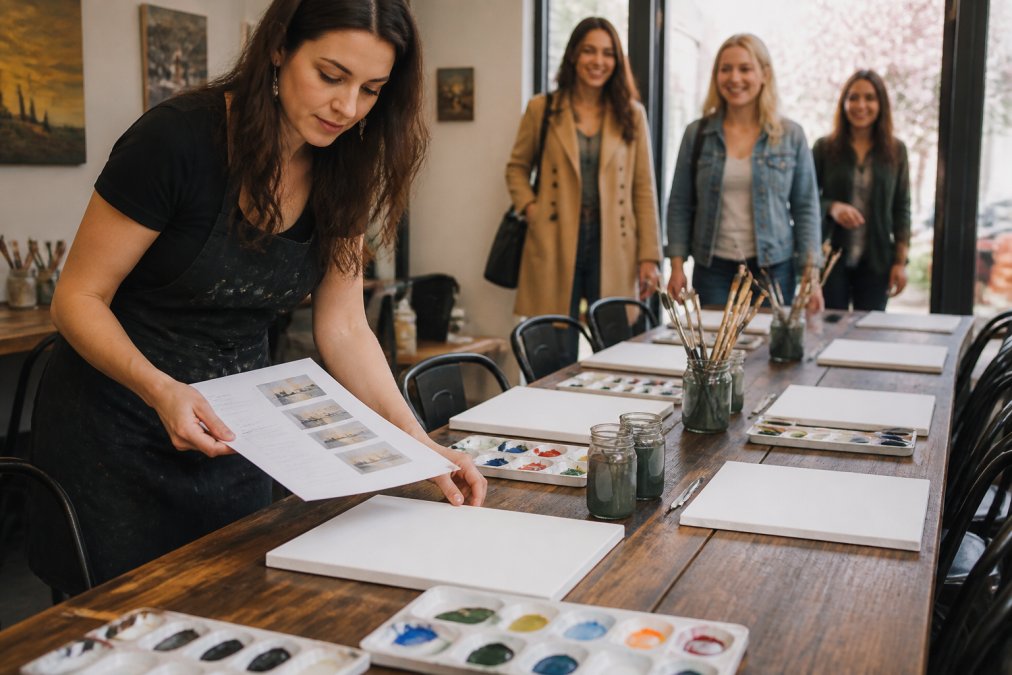
- Pick a beginner-safe design. Choose a composition with large shapes and few fine details. A sunset, a silhouette, or a simple landscape beats anything with precise geometry.
- Set the time budget. Most beginner sessions work best when the painting itself takes 90 minutes to two hours, with setup done before guests arrive.
- Prep one station per guest. Canvas, brush, water cup, paper towel, palette, and a printed step-by-step guide at every seat.
- Tape and prime before doors open. Taping borders in advance removes the slowest, most error-prone step from the live session.
- Teach in blocks. Walk the room through each step, then let guests catch up before moving on.
Logistics and Budgeting for Event Painting Equipment
Transporting painting gear is the part most guides ignore. Canvas, wet brushes, and paint trays do not travel like laptops, and a poorly packed car turns into a cleanup job before the event even starts.
The Three-Container System in Practice
Dry container. A rolling tote holds tape, brushes, palette knives, aprons, and the printed teaching guides. Keep a printed inventory taped inside the lid so you can restock without unpacking.
Budgeting and ROI for Event Painting Equipment
Budgeting follows the same logic. Reusable items like drop cloths, trays, and brushes are one-time costs that pay off across many events. Consumables like tape, canvas, and paint scale with guest count. Software sits in the middle: a fixed cost that replaces hours of unpaid prep time.
| Cost Type | Examples | How It Scales |
|---|---|---|
| One-time reusable | Drop cloths, trays, brush sets, rolling totes | Fixed regardless of class size |
| Per-event consumable | Tape, canvas, paint, paper towels, water cups | Scales with guest count |
| Planning software | Class design and lesson plan tools | Fixed, replaces prep hours |
Amortizing High-End Tools Across Contracts
A brush set sounds expensive until you run 30 classes with it, at which point it costs about the price of a coffee per event. The same math applies to a rolling tote, a portfolio case, or a set of reusable paint cups.
Frequently Asked Questions
What tools are essential for hosting a paint and sip event?
You need both digital and physical tools. For planning, use AI tools for event planning like PaintPrompt to generate class-ready designs and step-by-step guides. For the event itself, stock up on painter's tape, drop cloths, synthetic brushes, roller covers, paint trays, and easels. Having a portable kit with all these supplies ready to go saves setup time and ensures you never forget an essential item.
How can AI tools help in planning painting workshops?
AI tools for event planning can generate complete painting designs, 10-step instructions, color lists, and printable teaching plans in seconds. PaintPrompt, for example, lets you describe an idea and receive a class-ready design that beginners can follow. This cuts planning time from hours to minutes, helps you avoid guesswork, and ensures students finish their paintings successfully.
What is the 70/30 rule in painting?
The 70/30 rule is a composition guideline that suggests 70% of a painting should be dedicated to the main subject and 30% to negative space or background. It helps create balance and visual interest.
How do I create a professional painting lesson plan quickly?
Use a tool like PaintPrompt to generate a complete lesson plan in under a minute. Describe your painting idea, and the platform provides a 10-step guide, a color list, and a printable teaching plan. You can also mix in your own ideas. This approach saves hours of prep and ensures every class has a structured, beginner-friendly plan.
Running a painting event business means juggling design, supplies, and logistics at once, and the planning side is where most hosts lose their evenings. PaintPrompt was built by real paint and sip hosts to close that gap: describe an idea and get a class-ready design with a 10-step guide, a color list, and a printable teaching plan, plus unlimited ideas so your calendar never runs dry. Get started with PaintPrompt and plan a full month of classes in minutes.