Time-Saving Tips for Painting Instructors: 7 Smart Moves
· Editorial Team · 9 min read
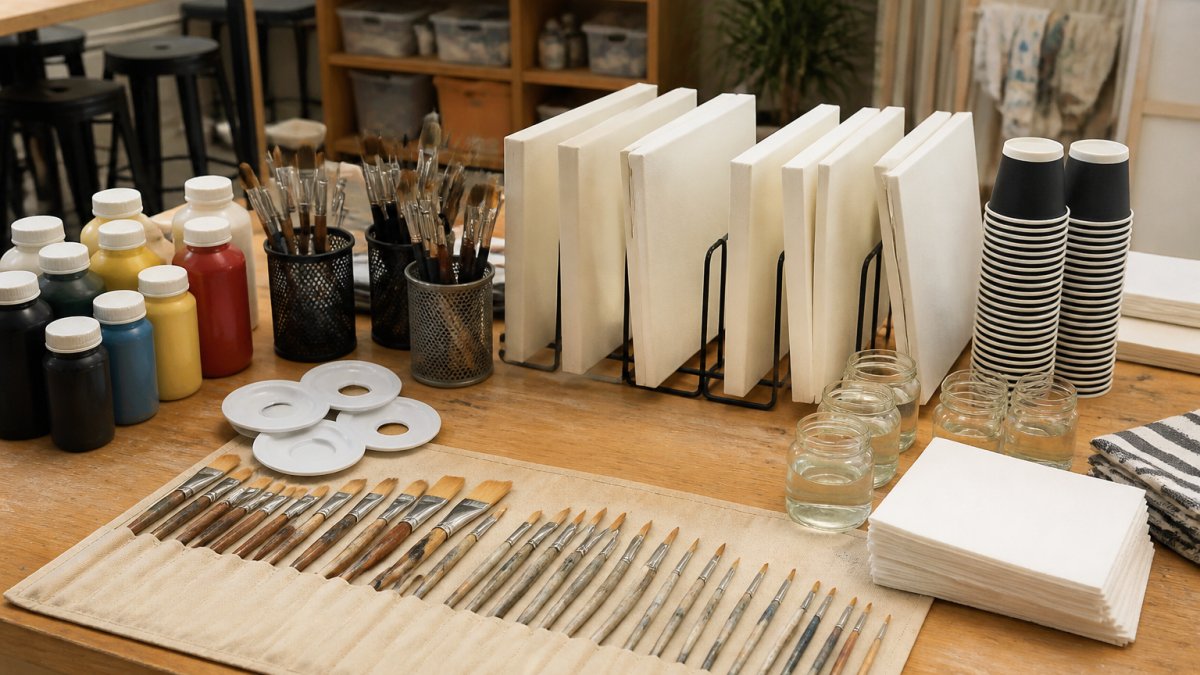
Table of Contents
- 1. Build a Reusable Painting Class Lesson Plan You Can Teach Again
- 2. Use a Painting Class Supply Checklist to Kill Setup and Cleanup Time
- 3. Design 30-Minute Art Class Activities That Still Feel Complete
- 4. Fresh Beginner Painting Workshop Ideas Without the Research Rabbit Hole
- 5. Cut Task Switching: Batch Prep, Bell Work, and Smart Tools
- 6. Simplify Decisions: Differentiation, Transitions, and Knowing When to Stop
- 7. Measure What Actually Saved You Time (and What Didn't)
- Frequently Asked Questions
Last Updated: October 12, 2026
1. Build a Reusable Painting Class Lesson Plan You Can Teach Again
Most painting instructors lose their first hour of prep to a blank page. These time-saving tips for painting start with a reusable painting class lesson plan. It is a single document that holds your timing, your demo steps, and your supply list, so you stop rebuilding the same class from scratch every week.
Here is how we would build one:
- Pick one subject per session, like a sunset, a lighthouse, or a vase of flowers.
- Write the painting in 8 to 10 steps, in the order guests actually paint them.
- Add a time block to each step, so a 90-minute class stays on schedule.
- Note the colors and brushes each step needs.
- Save it as a template you can swap the subject into later.
The real win is repetition. Once the structure exists, a new class takes minutes to plan instead of an evening.
PaintPrompt shortens this step further. Describe an idea and it returns a class-ready design with a 10-step guide, a color list, and a printable teaching plan. That is the whole prep document, done.
2. Use a Painting Class Supply Checklist to Kill Setup and Cleanup Time
A painting class supply checklist is the fastest fix in this whole article. Setup and cleanup eat more class time than teaching does. A written list turns both into a routine you can hand off.
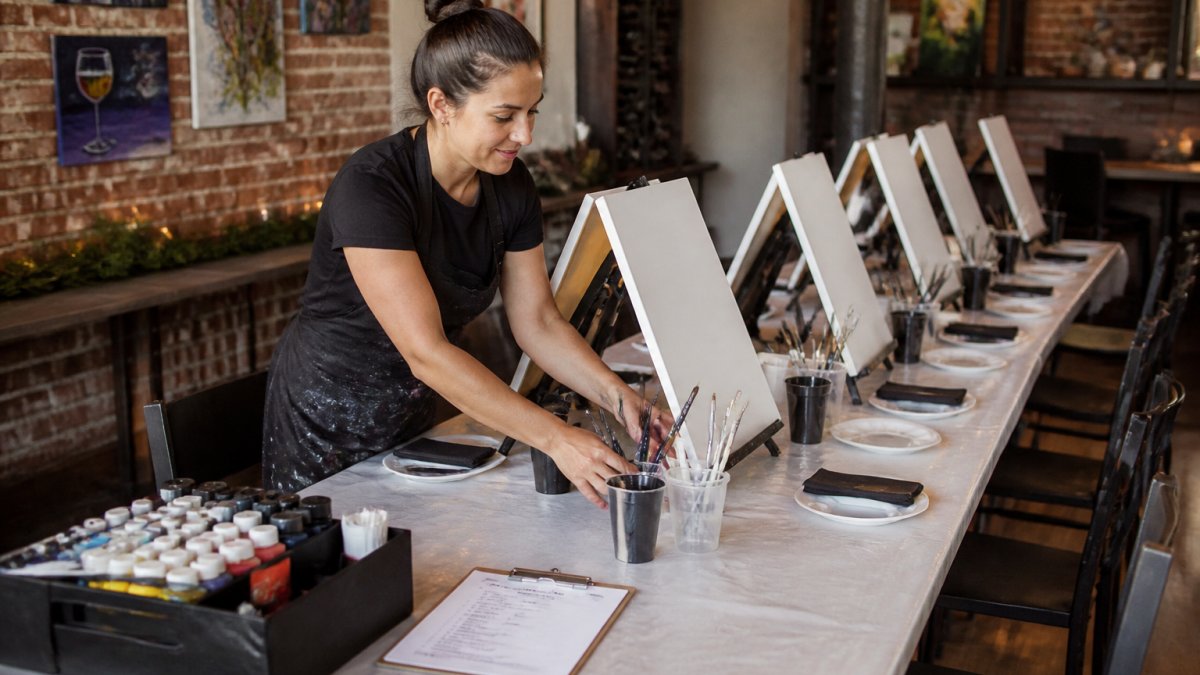
Start with one master list. Then build two smaller ones from it: a setup list and a cleanup list.
One Wall at a Time: Station Setup That Cuts Minutes
Set up one wall at a time instead of running the whole room. Finish the left wall, then the middle, then the right. You stop crisscrossing the room and you can see your progress.
- Pre-pour paint into cups before guests arrive.
- Lay one brush, one pencil, and one canvas per station.
- Tape the color list to the table edge.
- Keep a spare tray of brushes and water cups within reach.
Cleanup Systems That Run Without You
Cleanup should not depend on you doing every task. Give each table a job. One person collects water cups, one stacks canvases, one wipes tables. The room clears in a fraction of the time.
3. Design 30-Minute Art Class Activities That Still Feel Complete
A 30-minute art class activity works when the painting has fewer steps, not fewer results. Short classes fail when the artwork is too complex, not when it is too simple.
Use this pattern for short sessions:
- Choose a small painting with 5 to 6 steps.
- Pre-mix every color before guests sit down.
- Paint wet-on-wet so layers dry fast.
- Skip fine detail and let the shapes carry the piece.
Bell work fills the gap at the start. Hand guests a sketchbook prompt or a color-mixing warm-up the moment they arrive. That buys you five minutes to finish setup while they are already working.
4. Fresh Beginner Painting Workshop Ideas Without the Research Rabbit Hole
Beginner painting workshop ideas should come from a list you keep, not from a late-night search. The research rabbit hole is where planning time disappears.
Build a running idea bank instead. Add to it whenever you see something that would work on canvas: a local landmark, a seasonal theme, a simple animal, a bold abstract.
A few formats that hold up well for beginners:
- Single-subject paintings with a clear silhouette
- Two-color sunsets with a simple horizon
- Pattern pieces, like repeating leaves or waves
- Seasonal themes tied to a holiday or event
For corporate team-building events, keep the design simple and the steps short. Groups want a shared result, not a technical lesson. A printed guide for every guest keeps everyone moving at their own pace.
5. Cut Task Switching: Batch Prep, Bell Work, and Smart Tools
Task switching is the quiet time thief. Every time you jump between planning, prepping, and answering email, you pay a restart cost. Batching fixes it.
Try this weekly rhythm:
| Task | When | Time |
|---|---|---|
| Plan the month's designs | One sitting, start of month | 60 minutes |
| Batch supply prep | Day before each class | 20 minutes |
| Print guides and color lists | Same session as prep | 5 minutes |
| Review what worked | End of week | 10 minutes |
Smart tools carry part of the load. A design generator removes the blank-page problem. A saved template pack removes the formatting problem. Together they cut the planning block down to almost nothing.
6. Simplify Decisions: Differentiation, Transitions, and Knowing When to Stop
Mixed skill levels slow a class down more than anything else. Plan for them up front and the room runs itself.
For early finishers, keep a small extension task ready. A second small canvas, a detail pass, or a background wash gives them something to do while others catch up. For guests who struggle, have a simplified version of the same painting ready to hand out.
Transitions matter too. Announce the next step before you demo it. Count down from three before you start. Small cues keep the group together.
Then there is the hardest skill: knowing when to stop. A painting is done when the main shapes read clearly. Extra fussing muddies colors and eats class time.
7. Measure What Actually Saved You Time (and What Didn't)
Time-saving tips for painting only count if you can see the difference. Track three numbers for a month:
- Minutes spent planning each class
- Minutes spent on setup and cleanup
- Minutes of actual teaching time
Compare a normal week to a week using your new routine. If planning dropped but cleanup rose, your system is unbalanced. Adjust the piece that got worse.
Most instructors find the biggest gain comes from reusable plans and pre-poured supplies. The small tweaks matter less. Measure, keep what works, and drop the rest.
Frequently Asked Questions
What should a painting instructor prepare before a beginner workshop?
Before any beginner workshop, lock in three things: a written painting class lesson plan with timed steps, a painting class supply checklist per station, and a finished sample of the painting so guests see the target. Pre-mix base colors, pre-pour water cups, and lay out brushes so students start painting within the first five minutes instead of waiting on setup. A printable teaching guide with a color list and shape-blocking steps keeps the demo tight and stops you from improvising mid-class.
How can painting instructors manage a 30-minute art class?
Treat 30-minute art class activities as one small painting or one focused skill, not a full composition. Split the time: five minutes for bell work like a sketchbook prompt, ten minutes for a demo of one wall at a time, twelve minutes for student painting, and three minutes for a quick art criticism round. Simple subjects such as a single flower, a sunset band, or a small animal block-in fit the window and let guests finish something they're proud of.
How can painting instructors make cleanup faster?
Cleanup gets fast when it's built into the room, not added at the end. Use one wall at a time for wet paintings, line trash and water-dump buckets near the exit, and assign each table a cleanup role so guests handle brushes and cups while you handle paint and surfaces. Reusable teaching resources like laminated step cards and labeled supply bins mean nothing gets re-sorted between classes, which is where most instructors lose ten to fifteen minutes.
Does PaintPrompt work for corporate team-building events or just paint and sip studios?
PaintPrompt works for both. Corporate event planners use it to generate a class-ready design, a 10-step guide, a color list, and a printable teaching plan in under a minute, which fits team-building sessions where guests have mixed skill levels and limited time. Studio owners use the same output for recurring paint and sip nights, and instructors can mix in their own ideas while still getting the structured lesson plan and supply list.
Running a studio means juggling lesson planning, supplies, and a room full of beginners, and the prep is usually what suffers. PaintPrompt was built by real paint and sip hosts to remove that load. Describe an idea and you get a class-ready design, a 10-step guide, a color list, and a printable teaching plan, so a full month of classes takes minutes instead of evenings. Get started with PaintPrompt and spend your time teaching, not planning.